Mega blackout looming: why supplies and a grab bag matter more than ever
From the 1989 Quebec solar storm to India's 2012 grid collapse, major power cuts have hit hundreds of millions of people. Why a widespread blackout is a real risk, and what your emergency supplies and grab bag should contain.


The facts speak for themselves
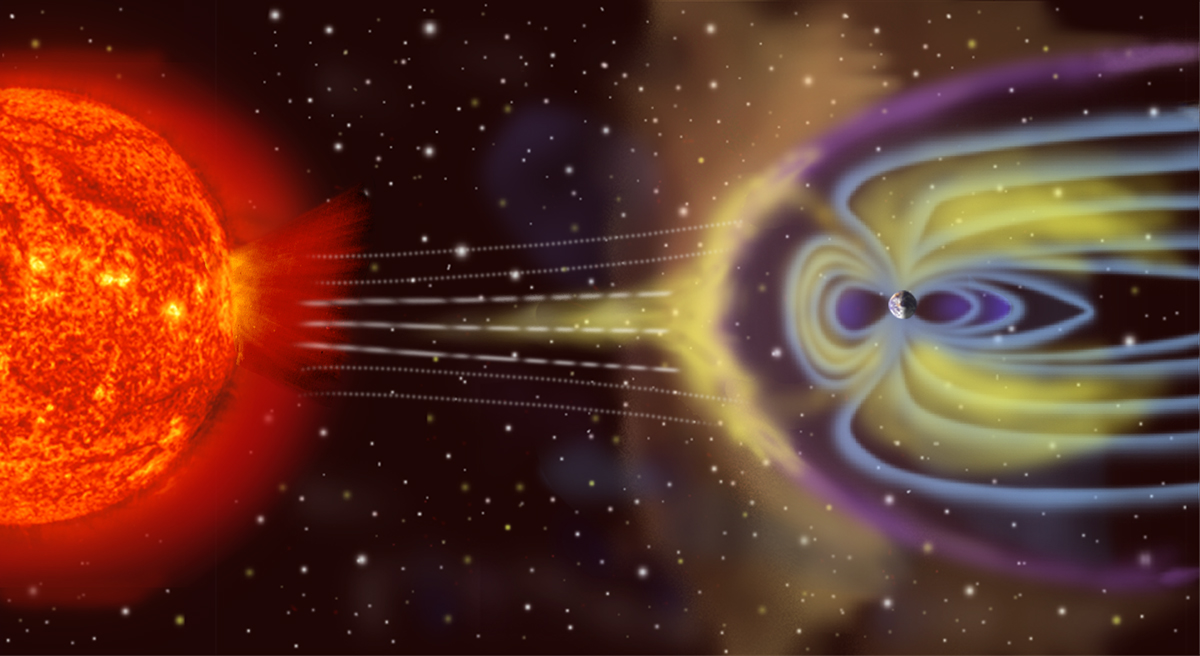
The latest scientific findings paint an alarming picture: the probability of a widespread blackout is rising exponentially. Warnings about solar storms are particularly worrying. As NASA reported on 24 May 2025, strong solar flares can already affect radio communications, navigation signals and even power grids.
History shows that this is not a theoretical danger. It is a real threat with far-reaching consequences. The geomagnetic storm of 13 March 1989 knocked out parts of the North American power grid and left around six million people in the Canadian province of Quebec in the dark for nine hours.
And it was far from a one-off. The list of major power cuts is a long one, and it shows how vulnerable our infrastructure is:
- Americans had reason to doubt their power supply as early as 9 November 1965, when a faulty relay caused the so-called Great Blackout, cutting off electricity to 25 million people in New York and the north-east for around 14 hours.
- On 13 July 1977, lightning struck New York and left around 8 million people without power for more than a day. There was looting.
- On 11 March 1999, another lightning strike hit a substation in Brazil, leaving 97 million people without power for 5 hours.
- The worst power cut in US history so far came on 14 August 2003, when a chain reaction left 50 million people in 8 US states and Canada without electricity for up to a day.
- Shortly afterwards, on 28 September 2003, a short circuit in Switzerland hit almost all of Italy, leaving around 55 million people without power for up to 18 hours.
- On 12 July 2004, just weeks before the Olympic Games, at least 7 million people in Greece lost power, probably because too many air conditioners had overloaded the grid.
- On 18 August 2005, grid fluctuations in Indonesia forced power stations to shut down, and almost 100 million people had to manage without electricity, some of them for more than 5 hours.
- On 4 November 2006, a high-voltage line over a river in Germany was switched off to let a cruise ship pass, and the lights went out for 10 million people across Europe.
- In January and February 2008, winter storms left 4 million people around the Chinese city of Chenzhou without power for almost 2 weeks. Eleven technicians were killed during the repair work.
- On 10 November 2009, storms on the border between Brazil and Paraguay caused a two- to three-hour blackout for 60 million people in Brazil, while the whole of Paraguay, a country of seven million, was cut off from its power supply.
- On 1 July 2012, severe summer storms knocked out power in parts of the eastern US, leaving around 3 million people without electricity for a time.
- Soon after, on 30 July 2012, the grid in northern India collapsed, and 370 million people were without electricity for hours.
These examples make it painfully clear how fragile power grids around the globe are. Our lives now run on fully digital, connected systems, so the consequences of a similar or even larger blackout, a so-called mega blackout, would be far more devastating and would put society under immense strain.
International climate researchers are issuing urgent warnings about the consequences of increasingly frequent natural disasters and solar storms that could cripple our modern infrastructure. In this critical situation, personal emergency preparedness, with well-planned emergency supplies and a professional grab bag, becomes a matter of survival.
The scientific facts are clear
The current climate report documents a disturbing trend:
"In recent years, a rapid increase in the number of natural disasters on the planet has been observed. Their dynamics are characterised by exponential growth. Natural disasters occur suddenly and in places where they have never happened before", according to the scientific analysis.
The figures are frightening. By 2028, scientists predict around 1,000 earthquakes of magnitude 3.0 or higher every day, compared with around 125 a day at present. This dramatic rise in geodynamic activity makes a widespread blackout considerably more likely.
Dr Egon Cholakian: urgent warnings from a leading scientist
The renowned scientist Dr Egon Cholakian sums up the urgency. His analysis of climate change leaves no doubt about how serious the situation is:
"According to the latest scientific findings, there is a probability that by 2036 the viability of the Earth's biosphere could be under threat. This assumption is based on precise mathematical models and factual data pointing to a possible critical state of the planet."
Cholakian also stresses the need for global cooperation:
"Tackling this problem effectively requires international cooperation between scientists who can pool their expertise and resources to develop and implement comprehensive measures."
Perhaps his most important message, though, is aimed at each of us personally:
"The subconscious is designed in such a way that, when it sees no way out of a critical situation, it simply blocks out reality and denies that the threat exists."
This psychological insight explains why so many people fail to prepare despite clear warning signs.
Personal responsibility, not panic: the key to staying safe
This press release is not intended to spread panic. Quite the opposite. Its purpose is to provide fact-based information and to encourage people to take responsibility for themselves. As the old saying aptly puts it:
"Saving the drowning is the job of the drowning themselves!"
At a time when a widespread blackout caused by solar storms or natural disasters could happen at any moment, being personally prepared becomes your most important life insurance. Well-planned emergency supplies and a professional grab bag are a sign of responsible foresight, not of pessimism.
The psychological side: feeling secure because you are prepared
A professionally equipped grab bag does two important jobs:
- it secures your physical survival
- it gives you psychological stability.
If you know you are ready for an emergency, you keep a clear head when a crisis hits. That calm can save lives while others panic.
Experience shows that people with well-planned emergency supplies and a grab bag make better decisions in extreme situations. They don't waste precious time on last-minute preparations and can concentrate on what matters most: protecting their family.
What should professional emergency supplies include?
A widespread blackout can last days, weeks or even months, according to Herbert Saurugg, Europe's leading blackout expert.
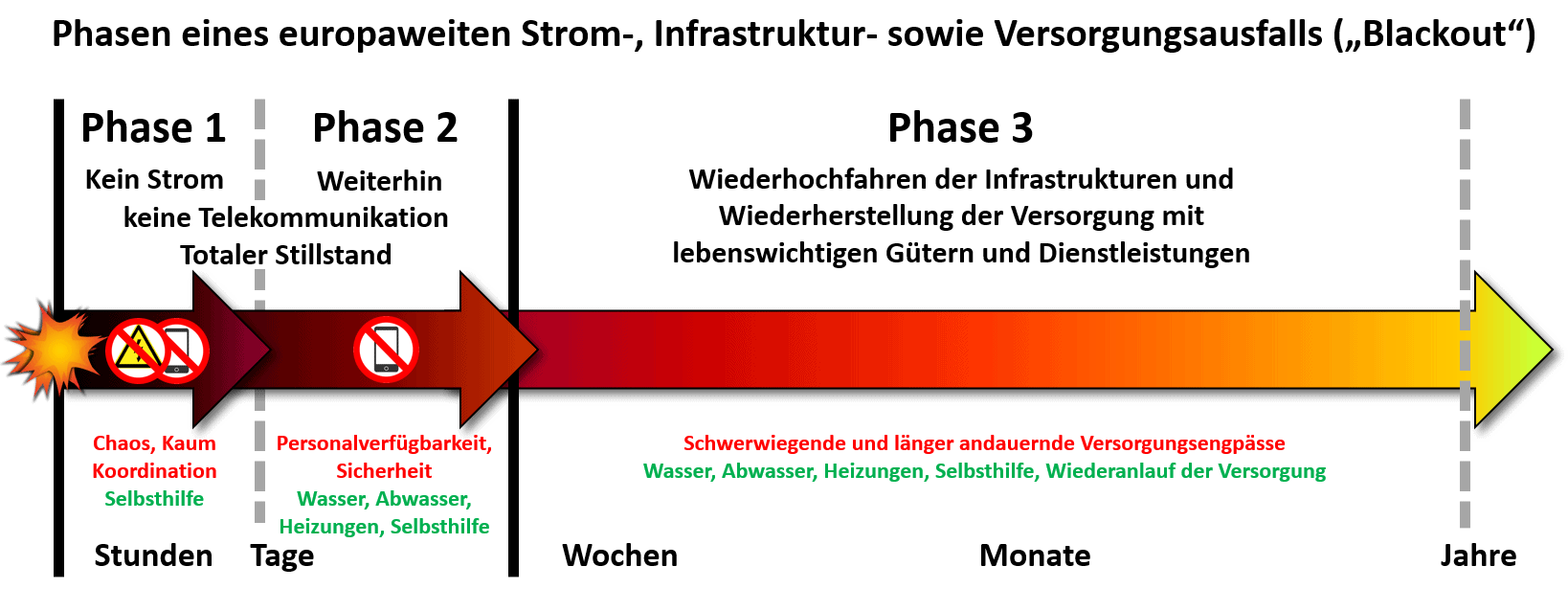
Without electricity, neither the heating nor the water supply works, supermarkets stay shut and petrol stations are out of action. Your emergency supplies should therefore cover the following:
- Drinking water: at least 0.5 litres per person per day for 14 days
- Long-life food: energy-rich food that can be eaten without refrigeration or cooking
- Medical supplies: first aid kit and essential medicines
- Warmth: sleeping bags, blankets, alternative ways to heat your home
- Light: torches, candles, matches
- Communication: battery-powered radio, power banks, phone
- Hygiene: soap, toilet paper, bin bags, portable toilets, wet wipes
- Documents: copies of important papers in waterproof packaging
For more details on what goes into an emergency backpack (also known as a grab bag), please see readykit.shop
The grab bag: being mobile can save lives
Emergency supplies are designed to keep you going at home, whereas a grab bag lets you evacuate quickly. In wildfires and house fires, floods, earthquakes or other acute dangers, every minute counts. A pre-packed grab bag should contain everything you need to survive the first 72 hours:
- Compact emergency food and a water filter
- First aid kit and escape kit
- Tools, fire starter, storm lighter
- Emergency tent, bivvy bag and a proper sleeping bag
- Signalling equipment and a compass
- Cash and important documents
- Warm clothing, plus electronics packed in waterproof bags
Professional solutions for maximum safety
For anyone who wants to give their family the best possible protection, ReadyKit offers carefully thought-out complete solutions. The Premium Emergency Backpack was developed by experts and contains everything you need in a crisis. Every item was carefully chosen and tested to make sure it works.
One point matters above all: think of every member of your family. The Premium Emergency Backpack for Partners makes sure your partner is also provided for in an emergency. Parents should prepare a separate emergency backpack for each child, one that the child could carry on their own.
Because EVERY human life is of the highest value, and every member of the family needs their own kit.
The clock is ticking: why act now?
The scientific data leave no room for doubt. Extreme weather events are becoming more frequent, the threat from solar storms is growing and geodynamic activity is rising exponentially. A widespread blackout is not a question of "if" but of "when".
If you prepare now, you are acting out of responsibility, not fear.
Well-stocked emergency supplies and a professional grab bag are an investment in your family's safety, and in an emergency that investment becomes priceless.
Conclusion: preparing is the sensible choice
The facts are clear. Whether the cause is solar storms, natural disasters or knock-on effects in our interconnected infrastructure, the risks are real and scientifically proven.
The good news is that anyone can prepare. With well-planned emergency supplies and a professional grab bag, you can turn potential helplessness into the security of knowing you can act.
Act now, for yourself and your family. Because once the widespread blackout arrives, it will be too late to prepare.
Note: This press release is based on current scientific findings and is intended to provide factual information about risks and ways to prepare. It is not scaremongering; its aim is to encourage responsible personal preparedness.